
Brush your dog’s teeth daily to help keep your dog healthy. The health of your dog’s teeth is a strong contributing factor to your dog’s overall health picture. Poor dental health can lead to a multitude of illnesses. Learning how to brush your dog’s teeth properly will help to assure this doesn’t happen.
First gather the needed tools to brush your dog’s teeth:
*This post may contain affiliate links which means if you make a purchase from a link on this site, I will earn a small commission. This helps to support the site and keep it going but you will not pay a penny extra.
- Finger toothbrush. These are rubber with small nubs. They do not have a handle but fit over your finger and sometimes are more acceptable to your dog.
- Dental sponges or pads are soft and pliable, come with a handle and are disposable. Again, some dogs accept these easier than a toothbrush. Gauze pads may also be used.
- Pet Toothpaste. Do not use human toothpaste as they contain foaming agents that can cause vomiting in dogs. Pet toothpastes also contain enzymes that help to clean the dog’s teeth better. And the most important thing to your dog – they come in flavors appealing to him, such as beef and chicken.
- Here is a great kit that includes a double head toothbrush, finger toothbrush and flavored dog toothpaste.
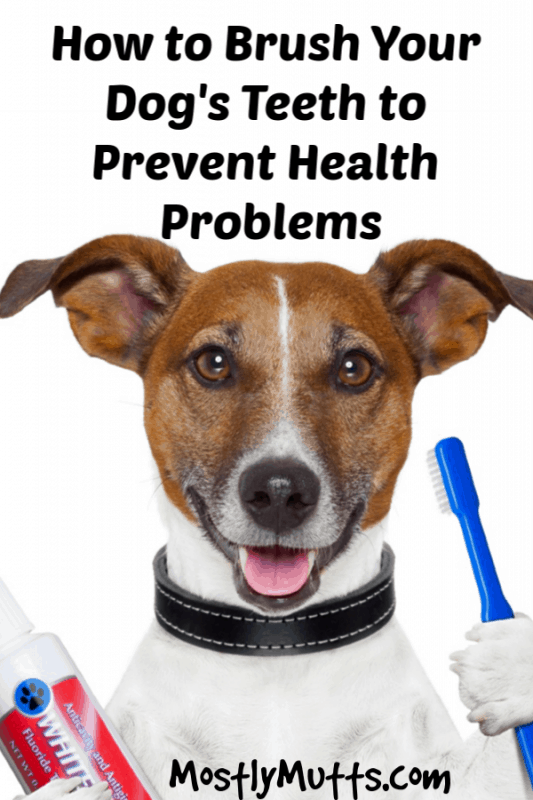 Now that you have the proper tools, let’s continue on to the steps in how to brush your dog’s teeth:
- Begin by placing a small amount of toothpaste on your finger and allowing your dog to lick it off.
- Next, apply another small dab of toothpaste to your finger and place the finger on the surface of one of your dog’s front teeth. Massage gently in a circular motion. Your dog will probably be licking at your finger as you do this but that’s okay; he’s getting used to having his tooth massaged.
- After your dog is used to having something in his mouth, it is time to introduce him to the toothbrush. Place some toothpaste on the brush and allow him to lick it off. Next, reapply more toothpaste, place the head of the toothbrush in your dog’s mouth and allow him to taste and lick at it. Don’t actually try to brush his teeth at this point. This step is simply to allow him to get used to having the brush in his mouth. After he’s comfortable with having the brush in his mouth, you can try placing the brush against his tooth (whichever tooth is easier to get to and he is most comfortable with) and moving it gently in a circular motion. You may need to repeat these steps for several days, until your dog is completely comfortable with the ritual. With luck, he will begin to look forward to the ritual. Now you are ready to move on to the actual brushing process.
- Wet the toothbrush or other item of your choice and apply a small dab of toothpaste to it. A dog normally has 42 teeth. Begin by brushing the outside surfaces (closest to the lip) of the fangs and the first large teeth in the back of the mouth on each side. These four teeth accumulate the most tartar. If these are the only teeth that you are able to brush, it will still be a major step toward improving your dog’s dental health.
- Brush gently in a circular motion, concentrating on the gum line. Spend at least five seconds on each tooth. Finish the fangs first, then proceed to the back teeth. Once the dog and you are comfortable with brushing the fangs and back teeth, you can expand your efforts to include the outer surfaces of the other teeth.
- Praise your dog often during and after the brushing. A treat following the process will go a long way towards turning this ritual into a much anticipated event.
Sometimes you will notice a small amount of blood when brushing your dog’s teeth. Lighten up on the pressure somewhat but do not stop the brushing. Your dog’s gums and mouth will only continue to get healthier with repeated brushings.
Learning how to brush your dog’s teeth requires some patience on your part but it is well worth the effort. With practice, you will be able to complete the brushing process within a couple minutes. Keep your focus on the gum line since this area accumulates the most plaque and tartar.
Make brushing your dog’s teeth a daily ritual. He will most likely look forward to it and especially spending that extra bonding time with you. And the practice will reward you with better health for your dog.
This post contains some affiliate links for your convenience (which means if you make a purchase after clicking a link I will earn a small commission but it won't cost you a penny more) Click here for my full disclosure policy.
Leave a Reply