
Keep Your Dog Safe From Dangerous Situations
Table of Contents
*This post may contain affiliate links which means if you make a purchase from a link on this site, I will earn a small commission. This helps to support the site and keep it going but you will not pay a penny extra.
Ah summertime, and the livin’ is easy! Endless days of sunshine and outdoor activities. After a long winter we are all ready for some summer relaxation. Unfortunately, the lazy, crazy, hazy days of summer are fraught with danger for our canine friends. Winter can be equally hazardous to your dog. Extreme cold and potential frostbite are ever prevalent during winter months. Precautions are necessary year-round in order to keep your dog safe and healthy.
HEAT
Sweating is the primary way the human body controls it’s temperature. Dogs lack this ability and must rely on cooling down through panting and the pads of their feet. Not terribly effective. Because of this we need to be very conscious of the following to keep your dog safe:
 Always make sure your dog has an ample supply of fresh clean drinking water. Automatic waterers are great for this but if you don’t own one or are not ready to purchase one, make sure to use a non-tip bowl. Empty and refill it several times a day and more often if it is getting low. Keep the water in a shady area if it is outside. Adding a few ice cubes will help to keep it cool longer and keep your dog safe from the heat.
Many people trim their dog’s fur down in the summer. Just make sure it is not shaved too close or sunburn will be a painful result. The best advice is to keep your dog inside a cool house during the hottest part of the day. Limit your walks with your canine friend to early morning or evenings after it has cooled down. Best for you and him in keeping your dog safe from the heat.
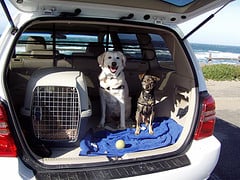
One of the greatest dangers from heat lies within one of dog’s favorite activities, the coveted car ride. Head out the window, fur flying in the breeze (and all over the car and you), nothing could be finer in a dog’s mind. And, all is fine as long as the air conditioner is running. But summertime rides are best kept to short non-stop jaunts. Once the car stops and the air conditioner is off, the temperature starts to rapidly rise. The temperature inside the car can reach 120 degrees within a few minutes, even with the windows slightly open. A dog’s normal temperature is 101.5. At 107 brain damage can occur and at 120 he can suffer from heat exhaustion and die.
COLD
Dogs are not meant to endure exposure to very low temperatures any more than humans are. Take every precaution to shelter your dog from the elements. The best and most recommended way is to allow your dog to live indoors with you. Being social creature, dogs need the companionship of their family. If you must (and there is rarely a situation where you must) keep your dog outside, provide him with a warm, safe shelter).
Purchase an insulated dog house for your dog. Place it in an area blocked by the wind, such as behind your house or surrounded by a fence. Never, Never, under any circumstances, chain your dog. Provide him with a fence for safety so he can move about freely. Position the opening of the house away from the direction the wind is blowing. Keep warm, dry blankets in the house or better yet, a heated dog kennel mat and surround the house with bales of straw to provide further insulation against the wind and cold. Check regularly to assure that the bedding is dry.
Provide your dog with a heated water bowl to protect the water from freezing. Keep the water clean and free of debris and change it daily. Check throughout the day to be sure your heated dog dish stays full.
INSECTS
Bugs and bees can create a serious problem for your precocious pooch. Just as curiosity killed the cat, butting into a bug’s business can injure the dog. Bees may appear busy but they are never too busy to notice when a dog’s nose is checking out the same flower they have an interest in. A nasty sting is the likely result. This calls for first aid. Make sure to keep some antihistamine on hand to help keep your dog safe, should he be allergic.
Ants flies and spiders can also cause some discomfort or even death in the case of a poisonous spider bite. There are some obvious symptoms that can indicate a bug bite. These would require first aid and possibly a speedy trip to the Vet. And of course, the annoying mosquito cannot be ignored. This warm weather pest can infect your beloved pet with the deadly heartworm if he is not on a heartworm prevention medication.
Flea infestation also escalates during the warm weather months. These pests love hot dry weather and multiply rapidly. Check your dog’s skin and coat thoroughly after each venture outdoors. There are many good products that can help to prevent these buggers from becoming a problem for your pet.
PLANTS
Many summer plants, while pretty to look at, can be irritating or deadly to eat or touch. There is a long list of plants that are dangerous for your pet because of their poisonous qualities. And there are those that are dangerous simply due to their structure.
Thorns from roses can become lodged in a sensitive paw and possibly cause infection if not swiftly removed. Check you dog’s paws regularly, especially if you notice him limping. If a thorn is found, remove it promptly and watch the dog closely to be sure his walking returns to normal. If not, a Vet. visit is the next step.
Even a harmless looking vine can become a hazard if your dog becomes tangled in it’s grasp. Better to keep them trimmed back.
The best prevention is to do a thorough scan of the area your dog plays in and eliminate any potential hazardous elements. In general, anything that would be a harmful plant to a child would also be harmful to your dog. Maybe even more so since dogs tend to scamper into smaller areas and are never cautious about anything.
Any season can be a great fun time for you and your dog with just a little thought and planning on your part. ENJOY!
This post contains some affiliate links for your convenience (which means if you make a purchase after clicking a link I will earn a small commission but it won't cost you a penny more) Click here for my full disclosure policy.
Leave a Reply